

Environments such as mountain tops, oceans, volcanoes and polar regions have always been experimental terrain for Rolex.
Oyster Perpetual watches accompanied numerous Himalayan expeditions – including the group that Sir Edmund Hillary and Tenzing Norgay Sherpa were part of when they became the first climbers to reach the summit of Everest on 29 May 1953 – and have been worn by explorers venturing to the far corners of the globe, through deserts, at the poles or in the depths of the Earth. In these often harsh and unfamiliar environments, distinguishing day from night can become impossible. For speleologists, who spend days at a time in darkness, or polar expeditions travelling under the midnight sun or through endless night, the Explorer II, with its 24-hour display, is an essential part of their equipment.

Designed for exploration
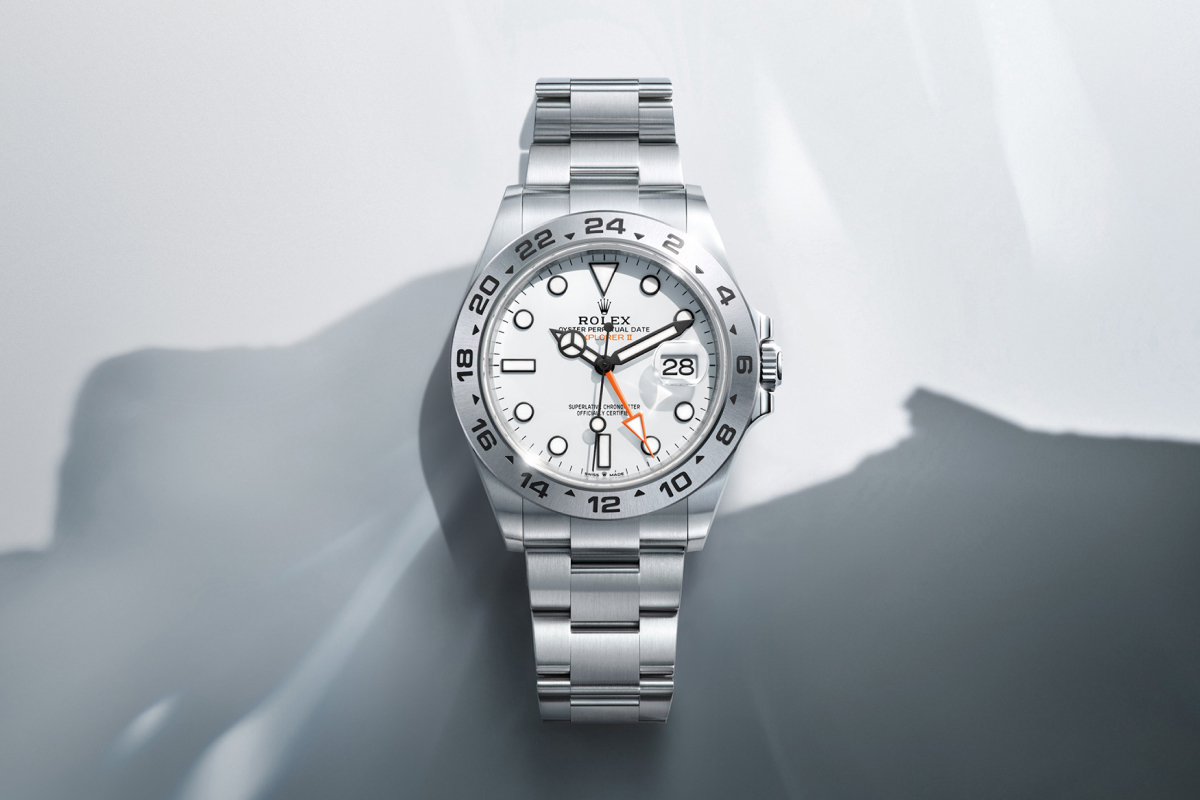
The Explorer II was introduced in 1971 and, in the same spirit as the Explorer, perpetuates the privileged relationship Rolex enjoys with exploration. Thanks to its 24-hour display comprising an additional, orange hour hand and an engraved bezel, the Explorer II allows the wearer to clearly distinguish daytime from night-time hours – a practical option in places where distinguishing day from night is difficult, such as at the poles at certain times of the year, and in caves – or to read the time in a second time zone.